
Guide · 4 min read
Choosing Blinds and Curtains for a South-Facing Room
How to protect fabric from sun fade and manage heat and glare in a south-facing room, without sacrificing brightness.
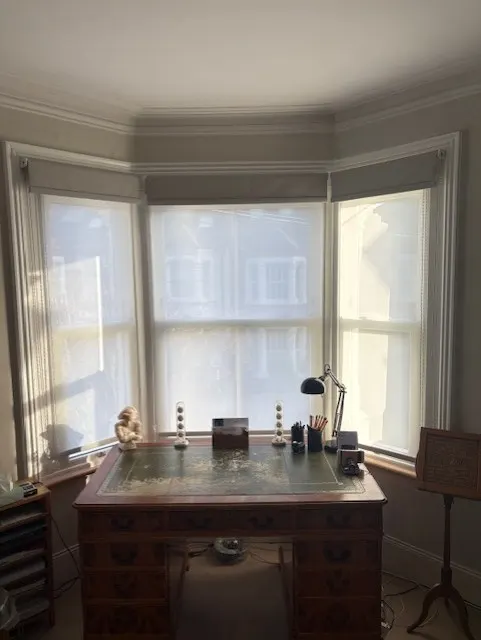
South-facing rooms get the most direct sunlight in the house, which is wonderful for brightness but creates two real problems for window dressings: fabric fade over time, and, on a sunny day, more heat and glare than you might want.
Fade resistance matters more here
UV exposure gradually fades most fabrics, and a south-facing window will fade an untreated fabric noticeably faster than one facing north or east. Some performance fabrics are specifically engineered to resist UV fading and are worth the upgrade for a consistently sunny room — ask us about fade- resistant options if your room gets strong, direct sun for much of the day.
Lining protects fabric too
A standard lining does double duty in a sunny room: it protects the face fabric from direct UV exposure on the reverse side, meaningfully slowing fade compared with an unlined curtain. If you’ve chosen a beautiful patterned fabric for a south-facing room, lining it properly is one of the simplest ways to protect that investment.
Managing heat and glare
A thermal lining or interlining helps keep a sunny room more comfortable by reducing heat transfer through the glass, on top of its winter insulation benefit. For blinds, a light-filtering roller blind fabric lets you cut glare and heat during the brightest part of the day while still keeping the room bright, without going to a full blackout.
Layering for flexibility
South-facing rooms benefit particularly from a layered approach — a blind or sheer for daytime glare control, with curtains for evenings and to fully darken the room if needed. This gives you the flexibility to dial brightness up or down through the day, rather than a single all-or-nothing window treatment.
Colour considerations
Very dark, saturated fabric colours tend to show fade more visibly over time than lighter or more muted tones, simply because the contrast between faded and unfaded fabric is more noticeable. This isn’t a reason to avoid darker fabrics in a bright room, but it’s worth factoring in alongside a good lining and, where the budget allows, a fade-resistant performance fabric. See our guide to curtain lining for how each type protects fabric.
See our blinds & shutters range and our curtains range for more.
Ready to talk through your windows?
Book a free design consultation and we’ll help you choose the right made-to-measure blinds, curtains or shutters for your home.
Get in touch