
Guide · 4 min read
Curtain Poles vs Curtain Tracks: What's the Difference?
How to choose between a decorative curtain pole and a curtain track, including when to use each and how they affect the way curtains hang.
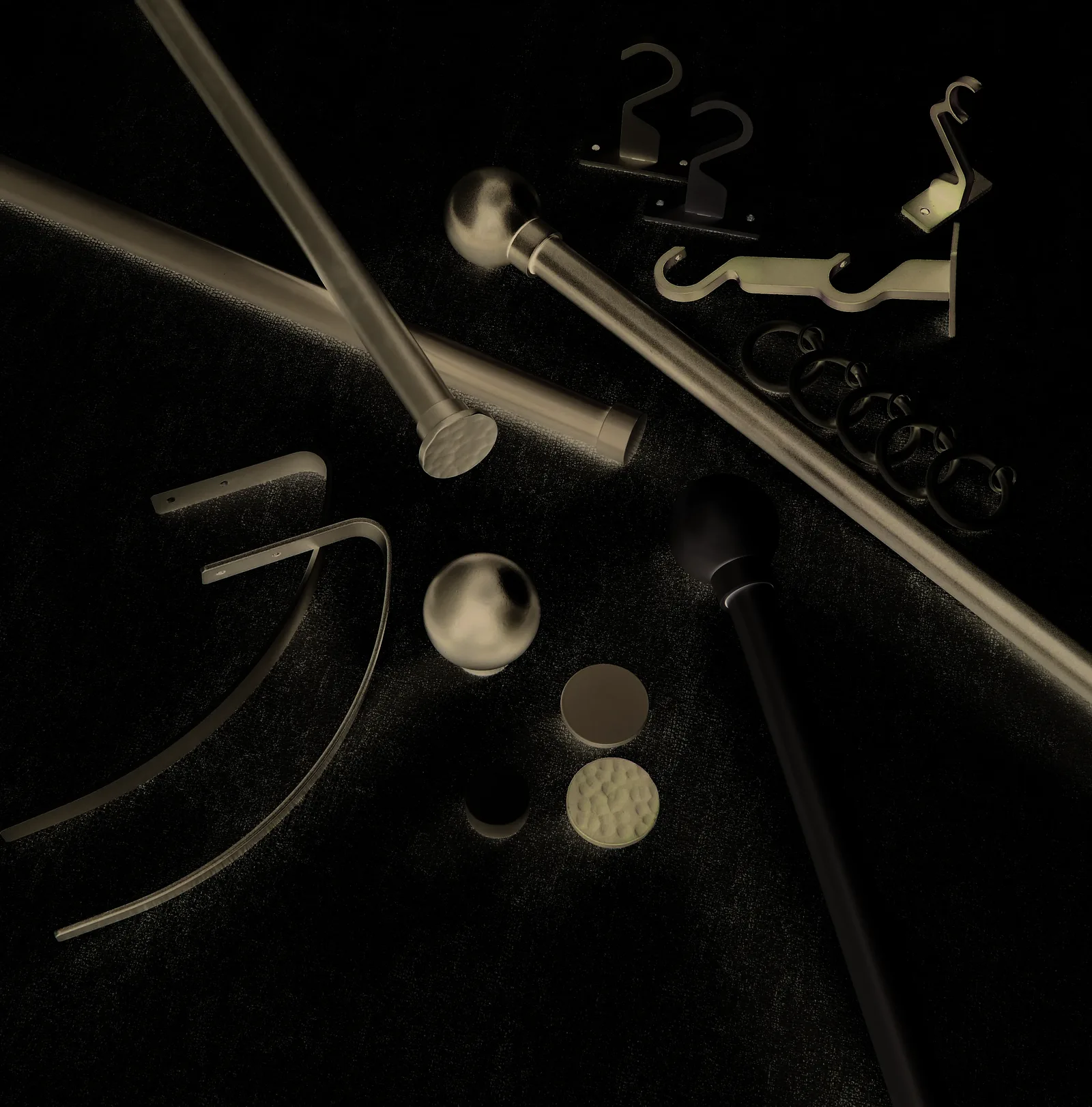
It’s an easy detail to overlook, but the choice between a pole and a track changes both the look of your curtains and how well they draw. Here’s how to decide.
Curtain poles
A pole is a decorative, visible support — usually wood or metal, finished with finials at each end — that the curtain hangs from via rings, eyelets, or pinch-pleat hooks. Because the pole itself is part of the look, it’s the natural choice when you want the hardware to be seen, and it works beautifully with pinch pleat, eyelet, or wave heading styles. Collections like our Ashbridge, Eden, and Neo ranges are designed as a genuine finishing detail in the room, not just a fixing.
Curtain tracks
A track is designed to be hidden, typically behind a pelmet or valance, or simply above the curtain where it isn’t on show. Tracks are more flexible for bay and bow windows, since they can be bent to follow the shape of the window, and they’re the standard choice for corded and motorised curtain systems, where smooth, quiet gliding matters more than decoration.
Which suits your room?
- Straight window, want the hardware on show: a pole, in a finish that complements your curtain fabric and room.
- Bay or bow window: a track, which bends cleanly around the angles — a pole can look disjointed with multiple straight sections and joints.
- Want a pelmet or valance: a track, since it sits neatly hidden behind the fabric pelmet.
- Heavy or motorised curtains: a track, engineered to carry the weight and, for motorised systems, to run smoothly and quietly.
Diameter and weight capacity
Poles typically come in 28mm, 35mm, 45mm and 50mm diameters — as a rule of thumb, go thicker for wider windows and heavier fabrics, both for visual balance and because thicker poles support more weight without sagging between brackets. We’ll always recommend the right diameter and bracket spacing for your specific fabric and curtain width.
Can you combine them?
Yes — a popular option is a track fitted behind a decorative pole or pelmet, giving you the smooth gliding of a track with the finished look of a pole or fabric pelmet on show. It’s a slightly more involved installation, but it gives the best of both when you want a particular look without compromising on how the curtains actually move. Once you’ve chosen between a pole and a track, see our guide to curtain heading styles for how that decision affects which heading — pencil pleat, eyelet, pinch pleat, or wave — will suit your curtains best.
See our curtains range for more.
Ready to talk through your windows?
Book a free design consultation and we’ll help you choose the right made-to-measure blinds, curtains or shutters for your home.
Get in touch