
Guide · 6 min read
Interior Shutters vs Blinds: Pros, Cons and Costs
How plantation shutters compare to blinds on cost, durability, light control and maintenance — and which rooms suit each best.
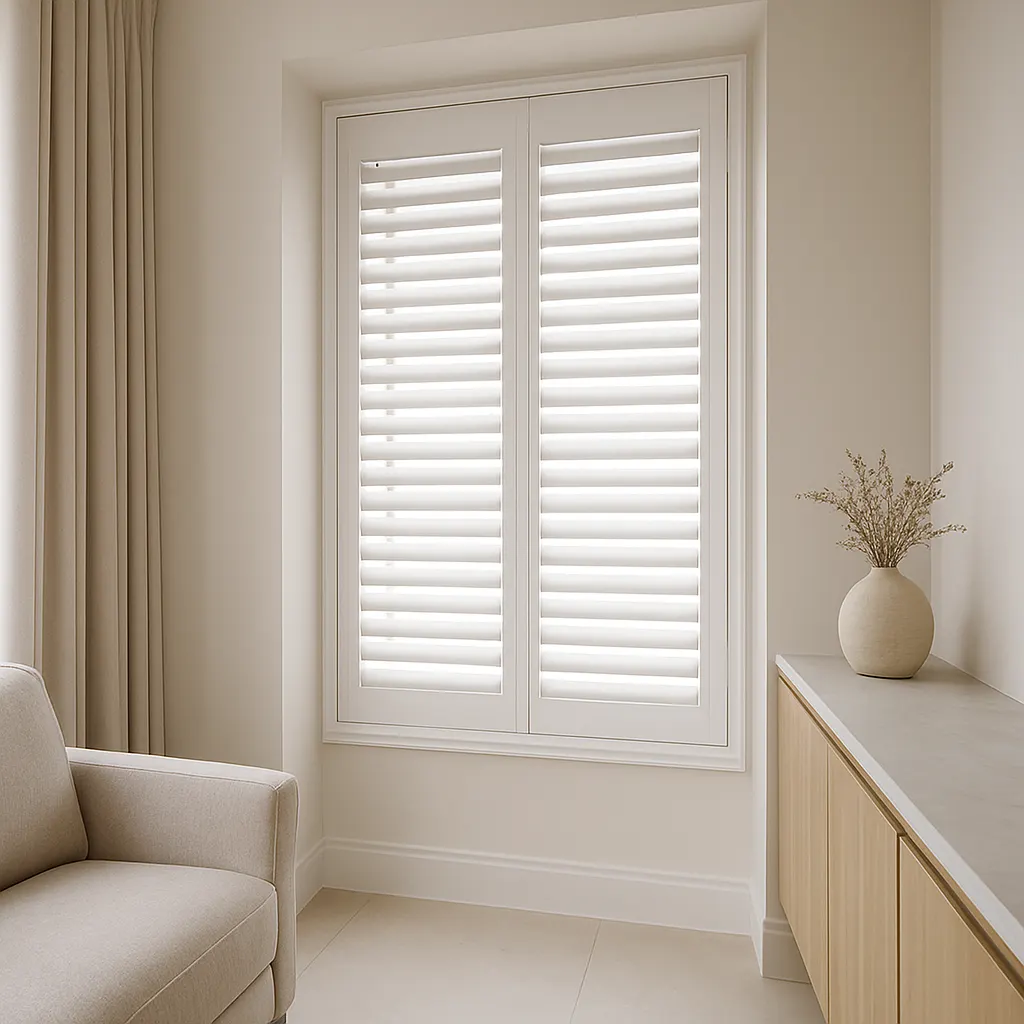
Shutters and blinds solve the same basic problem — privacy and light control — but they’re very different products with different price points, lifespans, and looks. Here’s an honest comparison to help you decide which is right for your room.
Upfront cost
This is the biggest practical difference. Made-to-measure shutters are a bespoke joinery product, built from real or engineered wood and fitted with a hinged frame — so they cost meaningfully more than most blinds, often several times as much for the same window. Blinds span a much wider price range, from simple roller blinds to premium motorised systems, so there’s more flexibility to fit a budget.
Durability and lifespan
Shutters are built to last decades — the frame, hinges, and louvres are solid and don’t fade, fray, or need replacing the way fabric does. Blinds, particularly fabric ones, will typically need replacing after 8–15 years depending on use, sunlight exposure, and fabric quality. If you’re renovating a forever home, that longer lifespan can offset the higher shutter cost over time.
Light control and privacy
Shutters give you precise, adjustable control over both light and privacy via the louvres, and can be split into tiers (café style) so you can open the top half while keeping the bottom private — ideal for ground-floor rooms facing the street. Blinds offer excellent light control too, especially blackout options, but privacy with an open blind is more binary — up or down — unless you choose a specific style like day/night or Allusion blinds.
Look and feel
Shutters have a solid, architectural quality that suits period properties, bay windows, and anyone wanting a timeless, high-end finish that adds to a home’s resale value. Blinds are more versatile stylistically — easy to change fabric or colour later, and available in looks ranging from minimal and contemporary to soft and traditional (Roman blinds).
Maintenance
Shutters just need an occasional wipe down — the material doesn’t hold dust or fade in the way fabric can, and there’s no cord or chain mechanism to maintain. Fabric blinds need more regular dusting or vacuuming and, depending on fabric, may need professional cleaning over time.
Which rooms suit which?
- Bathrooms and kitchens: shutters (especially waterproof ABS or engineered wood ranges) handle humidity and splashes better than most fabrics.
- Bay and bow windows: shutters are made to measure around the angles of a bay in a way that looks genuinely built-in; blinds can be fitted per-pane but the look is less seamless.
- Bedrooms: blinds — particularly blackout blinds, alone or with curtains — usually win on light control for the price.
- Rented properties: blinds are the more practical, lower-commitment choice.
Our take
There’s no universally “better” option — it’s a question of budget, how long you plan to stay in the property, and how much you value the architectural finish shutters bring. We fit both, and we’re happy to bring samples of each to your consultation so you can see and feel the difference before deciding. For bathrooms and kitchens specifically, see our guides to the best blinds for bathrooms and best blinds for kitchens, which cover waterproof shutter options too.
See our blinds & shutters range for more.
Ready to talk through your windows?
Book a free design consultation and we’ll help you choose the right made-to-measure blinds, curtains or shutters for your home.
Get in touch